

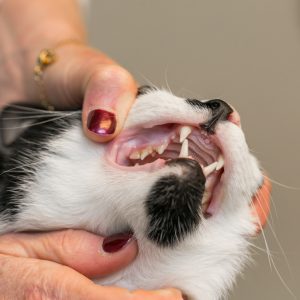
Why Does My Cat Need Oral Healthcare Examinations?
To keep your cat as healthy as possible, your veterinarian needs to examine your cat’s teeth and mouth every 6-12 months during their checkups. Exams help prevent and detect dental disease and ensure their overall dental health. Cats instinctively hide any signs of pain. So, you probably wouldn’t know if their teeth are painful. Your veterinarian is trained to notice signs of pain or dental disease, and they will conduct an oral exam while your cat is awake to check your cat’s teeth, gums, and tongue. Some cats will need a full exam and cleaning with anesthesia and dental x-rays if the veterinarian sees signs of dental problems below the gum line. Dental disease can lead to changes in your cat’s internal organs, including the heart, liver, and kidneys.
What Happens If My Cat Needs a Dentistry Procedure?
For a complete examination and x-rays, general anesthesia is required. During the procedure, your veterinarian will:
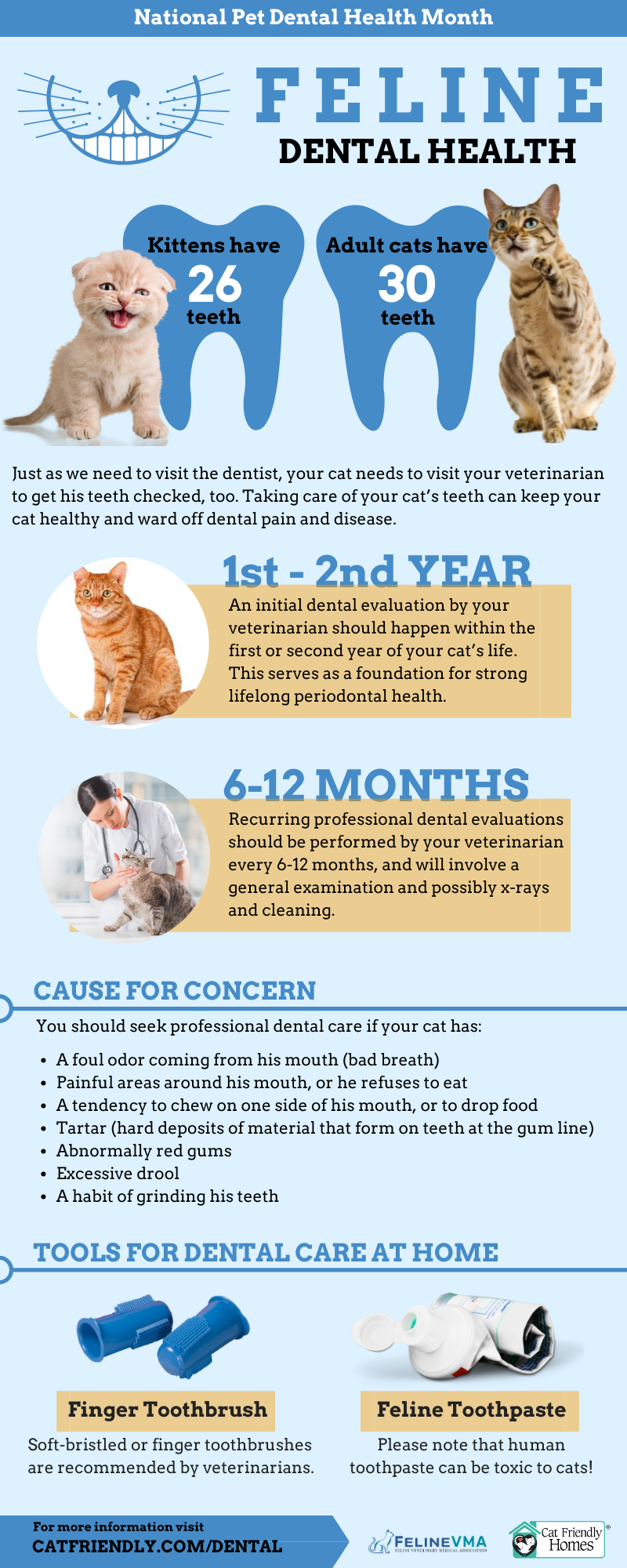
- Clean and polish their teeth.
- Examine each of your cat’s 30 teeth as well as their gums, the roof of their mouth, the inside of their cheeks, and the back of their throat. (All findings are recorded in a dental chart.)
- Look for gum recession, bone loss, areas of periodontal disease, tooth resorption, and oral masses.
- Take x-rays of each of their teeth.
- Dental x-rays allow your veterinarian to see the roots and surrounding bone of your cat’s teeth.
- Over half of your cat’s tooth structure is beneath the gum line and can only be evaluated with x-rays.
- Determine appropriate treatment for each tooth by combining the findings of the visual examination with the dental x-rays.
- If oral surgery is required, your veterinarian may remove any painful, diseased teeth so your cat can be comfortable and not in pain.
What are the Risks of Anesthesia?
If your cat has any dental or oral surgery procedure, general anesthesia is required. Take time to ask your veterinarian about their anesthetic protocols or plans. This way, you understand the steps they take to minimize the risk, relieve your fears, and provide your cat with a safe anesthetic procedure. Dental cleaning without anesthesia is not safe or effective.
Questions to Consider Asking Your Veterinarian
- Is my cat’s blood work completed before they receive anesthesia? Do you recommend any other testing for my cat?
- Tell me about your pain management plans for my cat. Do you use nerve blocks for oral surgery?
- Will my cat have an intravenous catheter and fluids during their procedure?
- How will my cat be monitored when they are under general anesthesia?
- When will my cat be discharged from the hospital after their procedure?
- Will they have medication when they go home?
More frequent dental examinations may be required if your cat has severe dental disease. Your veterinarian can help guide you in this process. Make sure you and your veterinarian discuss any findings from the examination, treatment options, and a home-care routine and a home-care routine, as well as tooth brushing.